Before you decide · Size & finish
Size, shape.
And the details between.
Tell us where the piece will be displayed, the approximate height you have in mind and which details matter most. We review those preferences together before agreeing a physical specification.
Planner sizes are preferences, not catalogue products. Material, finish and fulfilment still need validation. PayPal is available after you accept a studio quote.
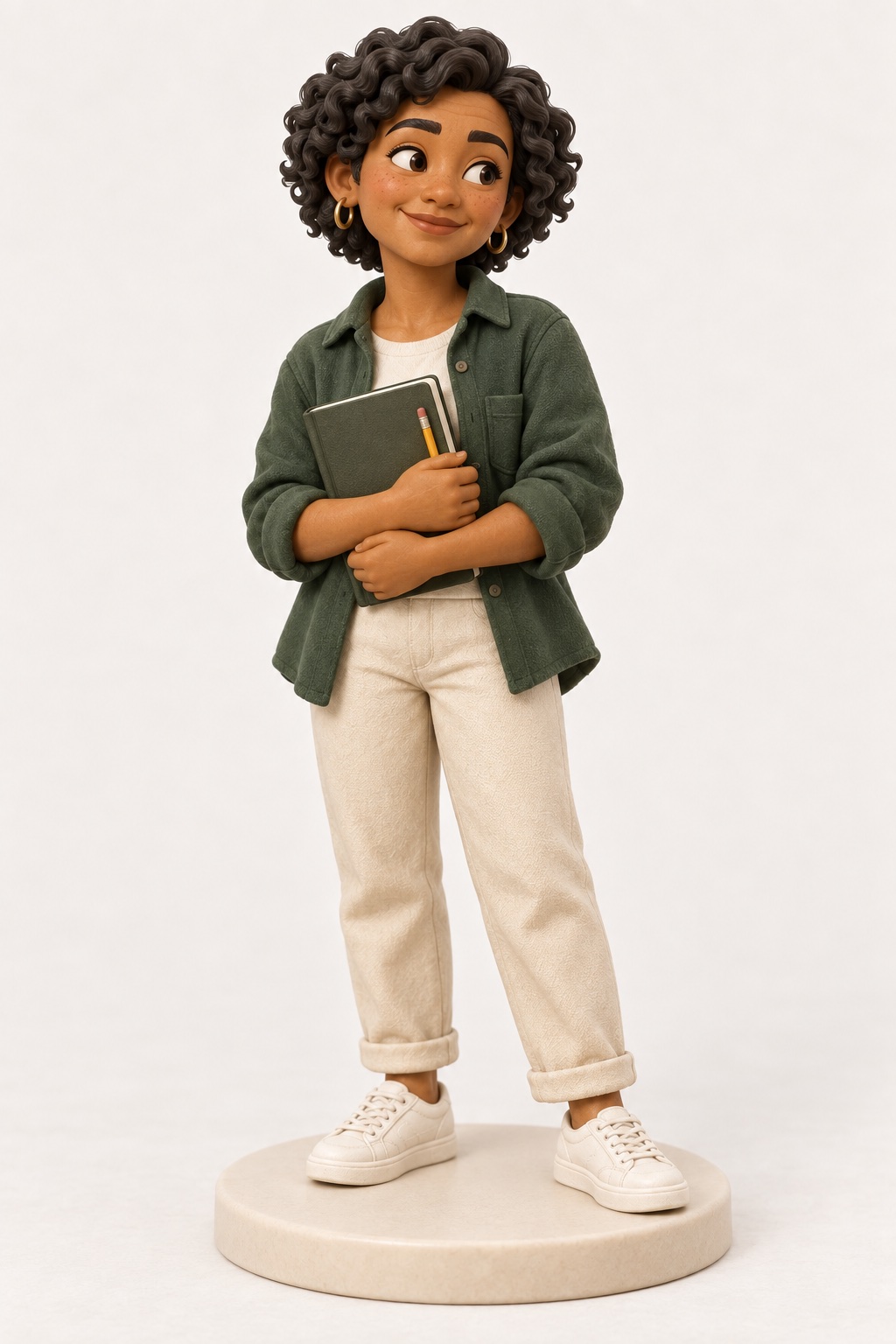
“How tall?” needs more than one answer.
Figure and overall height
Distinguish the figure itself from the complete assembly. State whether the measurement includes a base, hairstyle, hat or raised accessory. A seated figure and a standing figure at the same overall height will not have the same proportions.
Width, depth and base
Confirm the footprint as well as the height, especially for a pair, a pet or a scene. A wide pose may need more shelf space. The quote should identify whether a base is included and what the total dimensions describe.
Before choosing a height, measure the available shelf width, depth and clearance. Add your approximate preference in centimetres or inches to your brief. The planner’s size choices are not a validated product range, and a reference photograph is not a scale comparison.
“Finish” is more than a colour choice.
Colour direction
Would you like a natural, colourful or monochrome feel? Describe the mood; the available colour approach still needs review.
Surface expectation
A smooth render cannot establish the texture or sheen of a physical object. Discuss those expectations separately from the image style.
Detail at scale
Glasses, tiny lettering and projecting props may need an agreed simplification. Tell us which features are essential before we assess the design.
Small objects need deliberate simplification.
Tiny lettering, fine patterns, individual strands and thin jewellery may not remain clear at a smaller scale. Making a design larger does not automatically make every detail practical either. The intended process, geometry and finish need to be assessed together.
Identify what must remain recognisable and what may be simplified. A proposed change should be explained before agreement, not hidden behind a highly polished render.
Glasses, tails and props deserve their own conversation.
Thin or projecting details can be vulnerable during making, handling or delivery. Possible design responses include thickening a part, joining it to a nearby surface, changing the pose or reducing or removing it. None is an automatic change: feasibility and your agreement come first.
Any separate parts, attachment requirements and handling limitations need to be included in the scope. Packaging does not make a delicate design indestructible. We do not claim a durability standard that has not been tested.
Three kinds of image. Three different jobs.
- 2D direction. Helps discuss styling, important features and the overall idea. It is not a manufacturing-ready specification.
- 3D design preview. Helps review the proposed form and details from the supplied views. Rendered lighting, smoothness and colour are not a guarantee of the physical surface.
- Physical sample photograph. Can demonstrate the actual sample shown, if its material, dimensions and finish are identified. A third-party reference is not evidence of our production capability.
Own Object has not yet validated the production materials or finish options for this service. Before presenting an option as available, we need our own physical samples with useful scale context, ordinary lighting and surface close-ups. Do not assume resin, hand painting, seamless surfaces or photographic colour reproduction from the reference imagery.
Before approving a version, check these details.
- The version is clearly identified and the supplied views show the details being approved.
- Your priority features, pose, outfit, markings and exact spelling match the agreed scope.
- Overall dimensions, base inclusion and footprint are written down.
- Accessory changes, separate parts and practical limitations have been explained.
- The material and finish are explicitly agreed, rather than inferred from the screen image.
The planned included allowance is one 2D direction revision and one small 3D revision. A new subject, major redesign or change after approval may need a new scope, price and schedule agreement. No response is not approval, and an altered version needs fresh confirmation.
Approval is a checkpoint for an identified design, not a delivery date. The quote must separate design, making and transit timing. Read the service process and quotation scope →
Clear expectations come before an order.
Registration, reference uploads and enquiry submission are open. Payment is available only for an accepted studio quote. Reference imagery is not an Own Object delivery example or a verified product specification.
For general questions, contact hello@ownobject.com. Please do not email private photographs, identity documents or project files. You can read the photo preparation guide here.